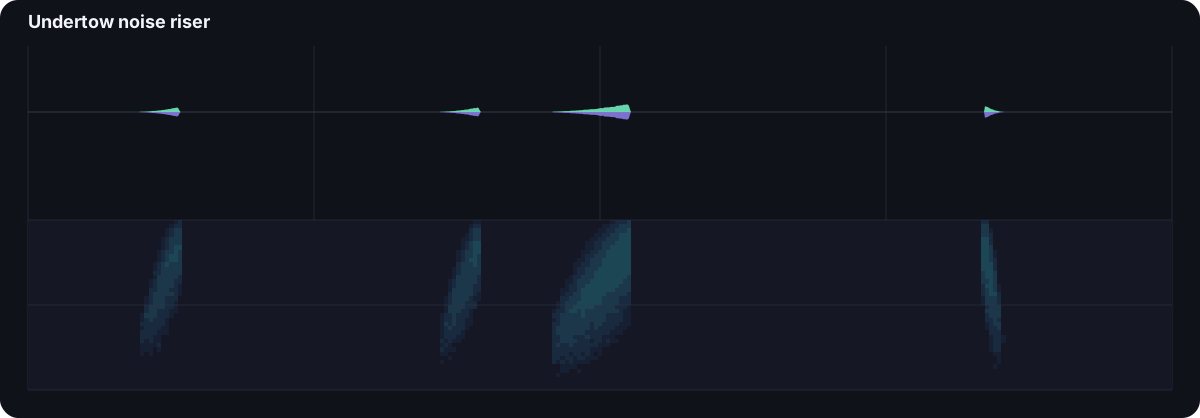
Undertow kick
Ladder · a sine tuned to F with a two-octave pitch drop and ladder saturation; accented beats and phrase-end variations.
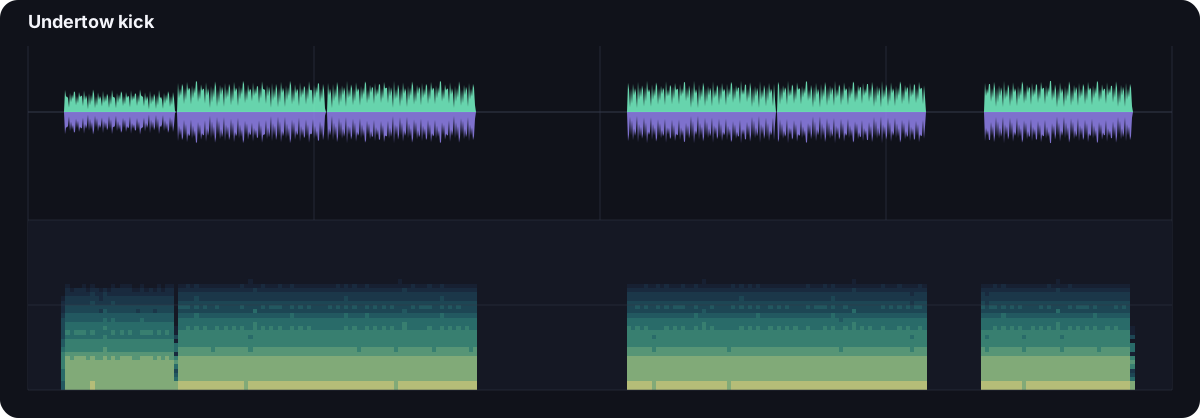
Progressive trance built by subtraction from one three-note motif: a loop that never quite repeats the same way, a long melody tied across the bar lines, and a drop that is the only moment everything plays at once.

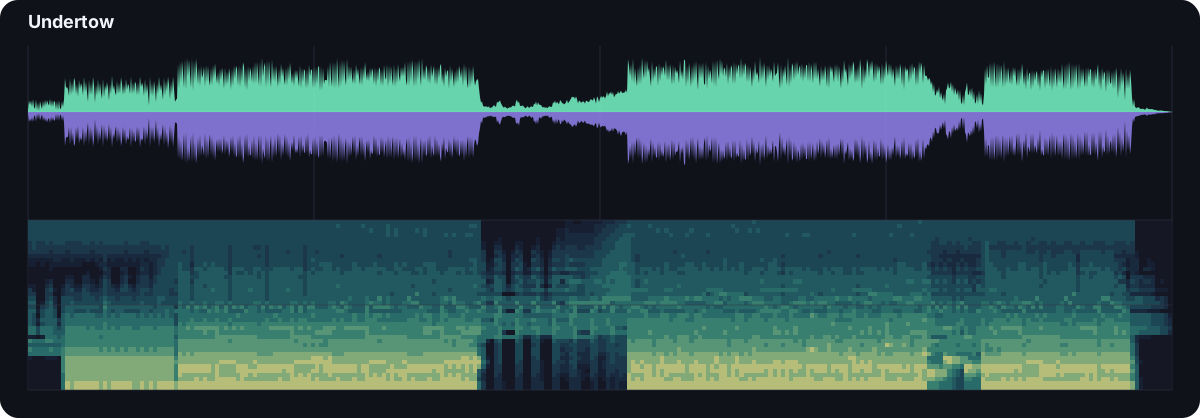
Each section declares which parts play and how densely; the section markers below come from the same table as the score.
| Section | Bars | Time | What happens |
|---|---|---|---|
| intro | 1–16 | 0:00 | Kick from bar 5, closed hats, the pad's filter opening across the section; the motif heard once, alone; a short riser into the groove. |
| groove | 17–32 | 0:28 | Off-beat sub, clap, sixteenth hats; the motif every bar, varied every four; the kick starts pumping the bass and music buses. |
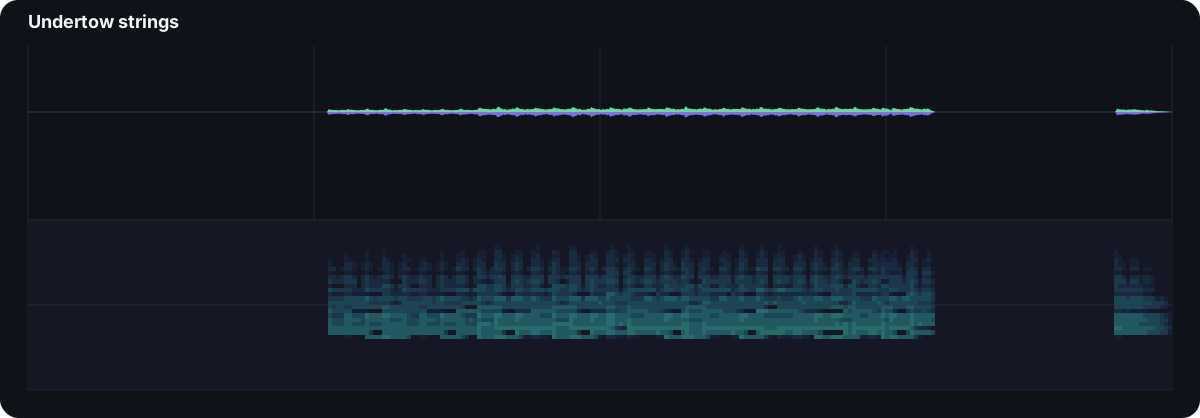
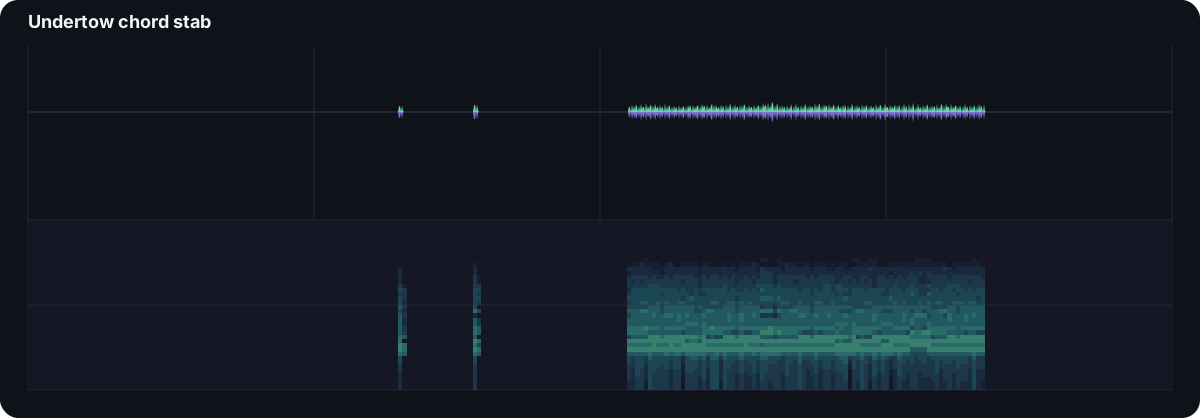
| theme | 33–48 | 0:56 | Strings join, the long melody makes its first quiet statement, chord stabs answer the phrase ends, a short riser. |
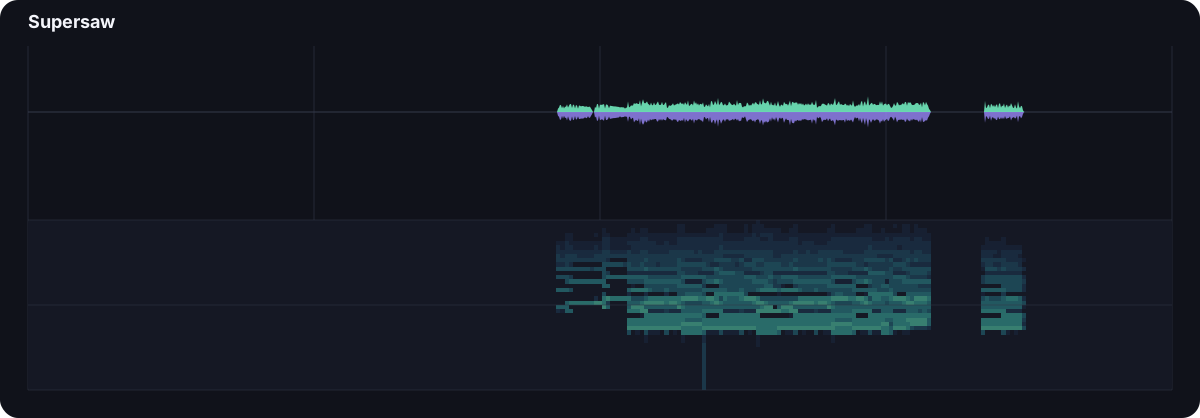
| breakdown | 49–64 | 1:25 | No kick, no bass: the loop runs backwards under the reversed motif, the supersaw previews the melody through a high-pass sweeping down, a riser and a clap roll. |
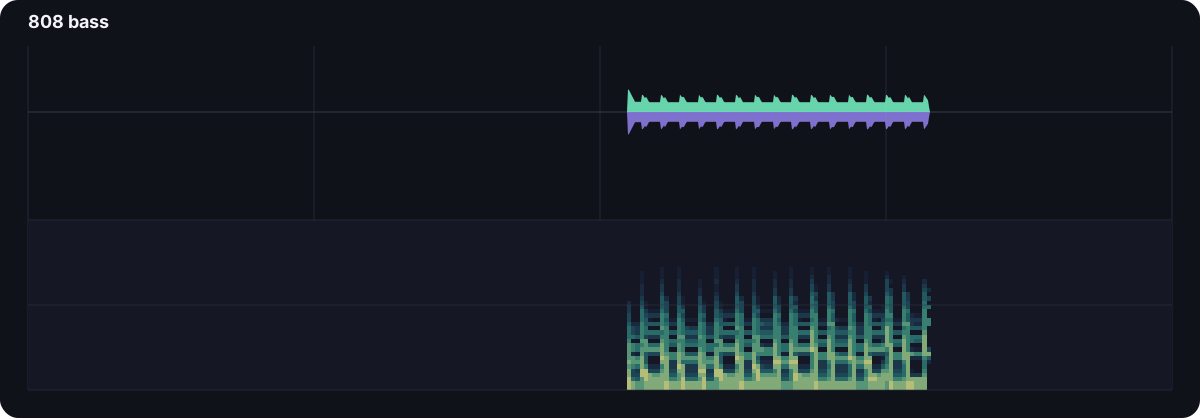
| drop | 65–96 | 1:53 | Everything at once: the 808 gliding into each chord, the supersaw carrying the long melody, off-beat stabs. The melody's long holds get small answers, a string voice resolving under them or vibrato with a lifting high-pass, and stay simple around the busier phrase ends. The second half turns through E♭ into B♭ minor: the harmony's filters close on the turn's last beat and open again as the melody returns. |
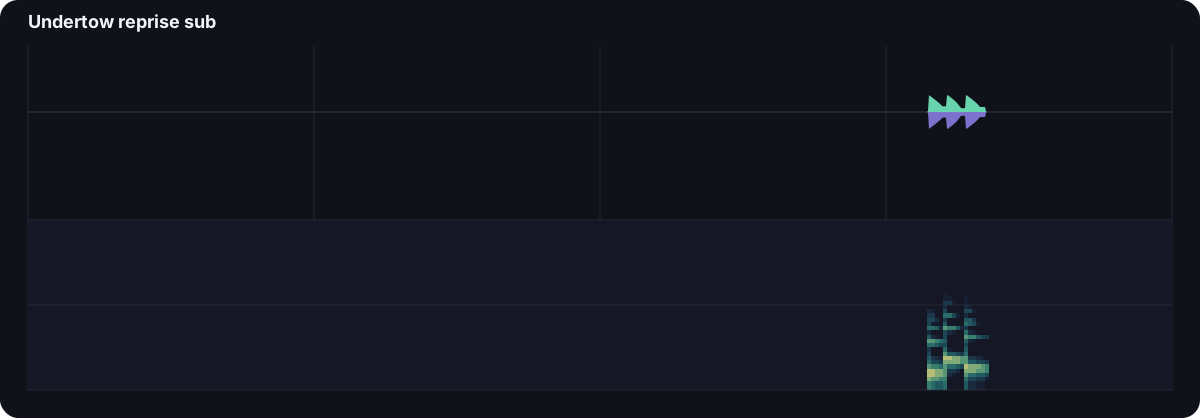
| reprise | 97–102 | 2:49 | No kick, so the bass yields to the stabs instead, each chord blooming and relaxing under their groove; the motif breaks down to a rising pair that lands half a bar early, anticipating the outro. |
| outro | 103–118 | 3:00 | A downlifter, then the groove returns and loses a layer every few bars; the kick leaves last. |
| release | 119–122 | 3:28 | Strings alone on D♭maj7, fading out unresolved. |
Four group buses sit between the instruments and the master. Drums (kick, clap, hats) is a plain sum. Low (sub, 808) is ducked hard by the kick, so the two never pile up in the same 50 ms. Reprise bass has no kick to follow, so it is ducked by the chord stabs instead. Music (keys, pad, strings, stabs, supersaw) is high-passed to leave the low end to the bass and ducked lightly by the kick, which is the pump. The riser stays outside the groups. Sends to the dotted-eighth delay and the reverb are taken before the groups, so the tails do not pump. Parameter slides open the pad, sweep the supersaw's high-pass and drive the riser's band-pass.
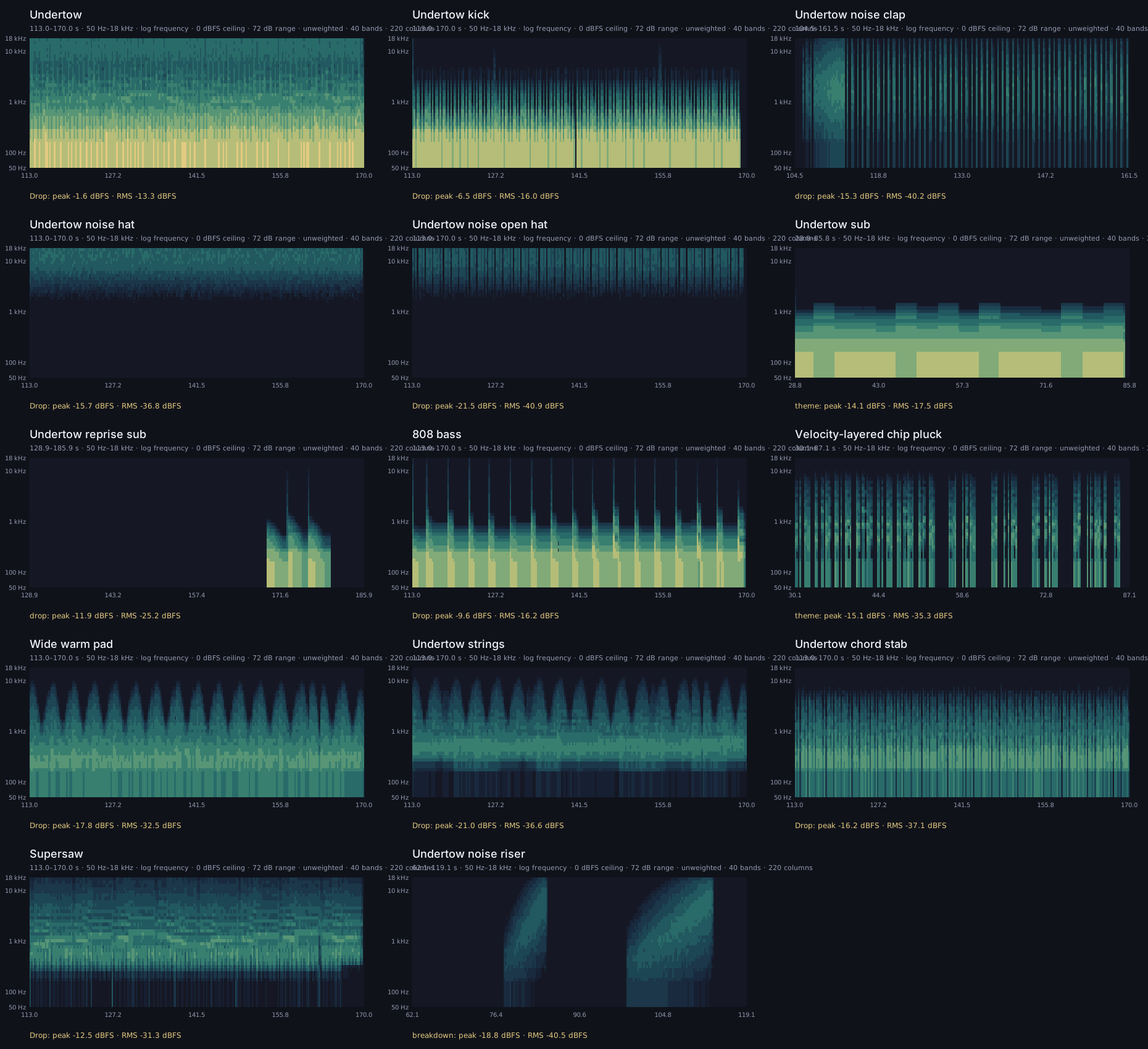
Ladder · a sine tuned to F with a two-octave pitch drop and ladder saturation; accented beats and phrase-end variations.
Layered noise · band-passed with a quick filter snap; also the roll into the drop.
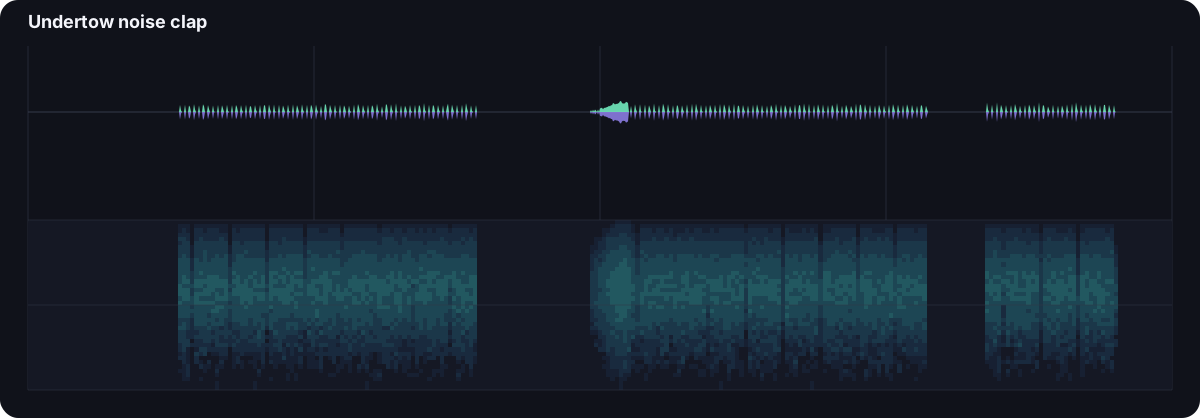
Layered noise · high-passed sixteenths with no metallic partials.
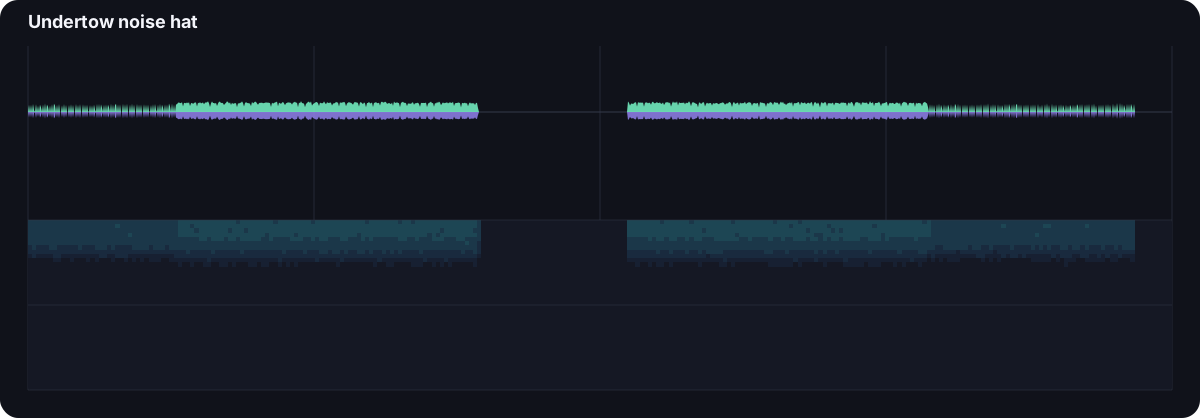
Layered noise · longer off-beats in the theme and the drop.
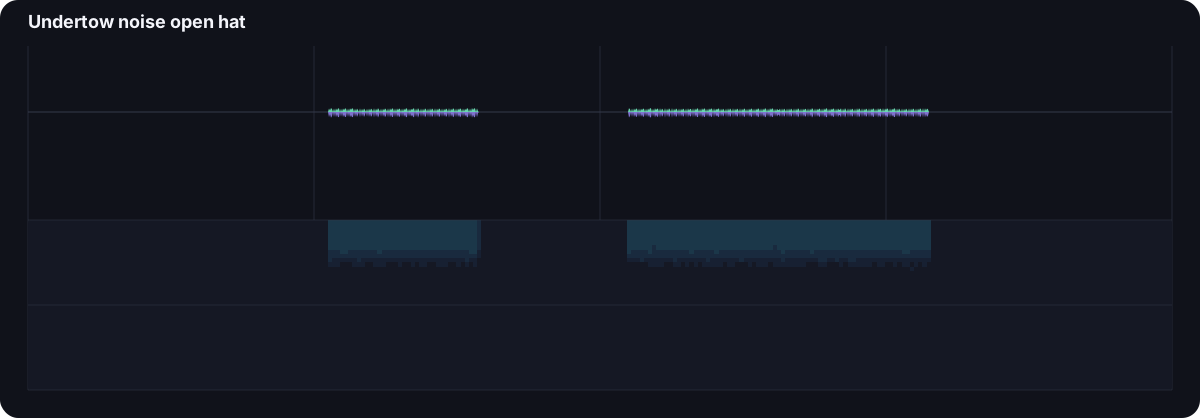
Ladder · a driven sine swelling in on the off-beats.
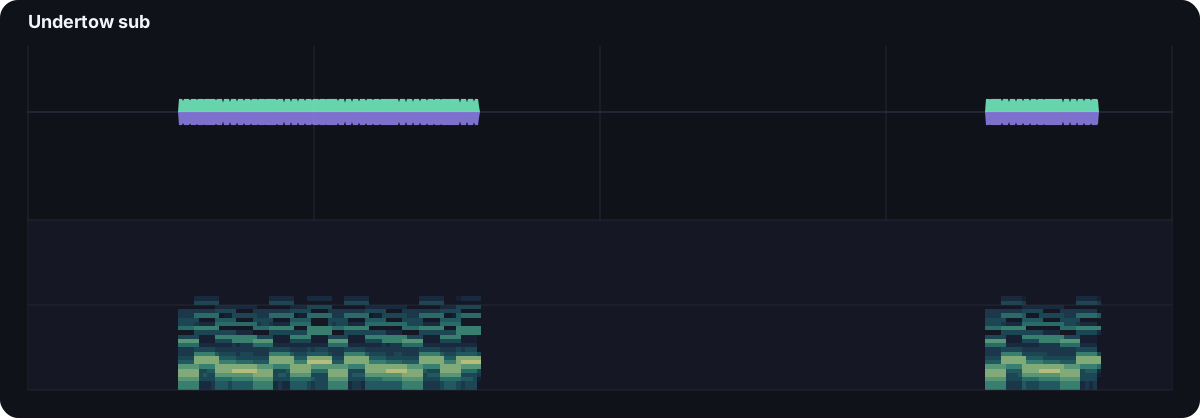
Ladder · one note per chord in the reprise, its filter blooming open and closing as it decays, ducked under the stabs.
Ladder · a sine with a pitch sweep and saturation, gliding into every chord change of the drop.
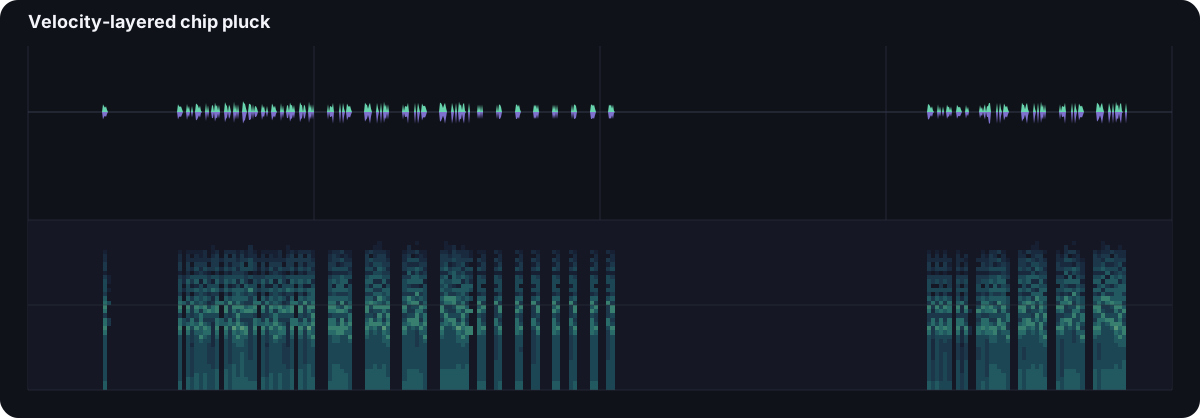
Layered · the three-note motif, its variations, and the long melody's quiet statements.
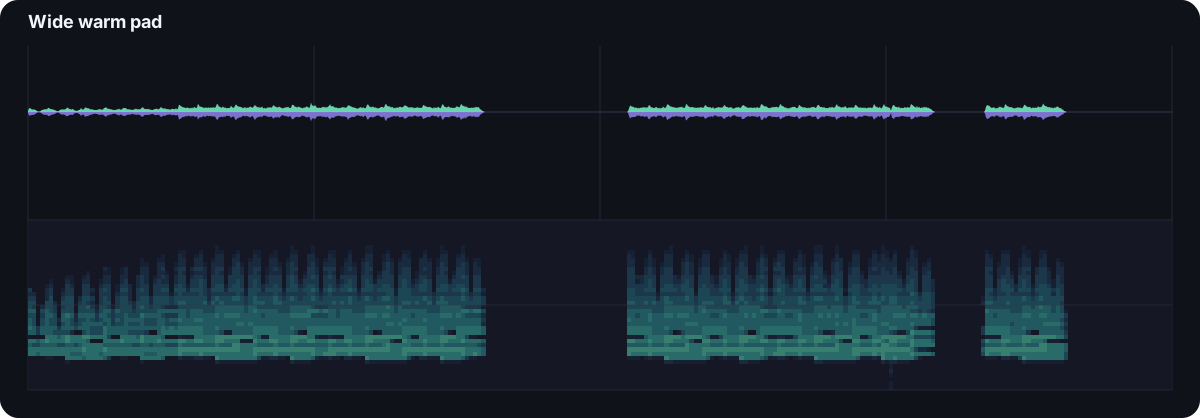
Prophet · warm saw chords whose filter opens across the intro.
Prophet · a brighter pad an octave up that carries the ending alone.
Layered · three detuned saws through a plucked state-variable low-pass, on the off-beats.
Layered · seven-voice unison saw behind a state-variable high-pass; the drop's lead and chords.
Layered noise · band-passed and swept up into sections, and down at the outro.