Netz
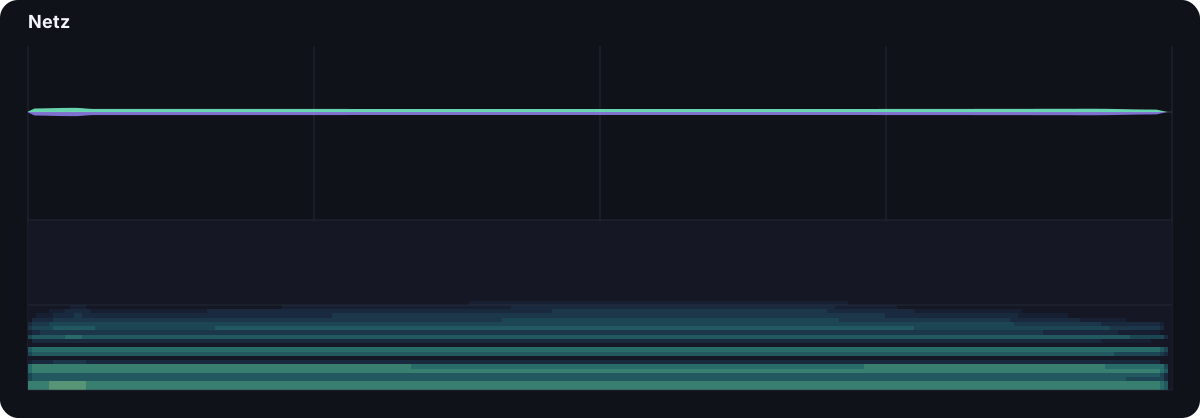
Layered · a sine on the 50 Hz tonic and a saw an octave up under a low-pass that follows the load: the hum, from the first row to the last.
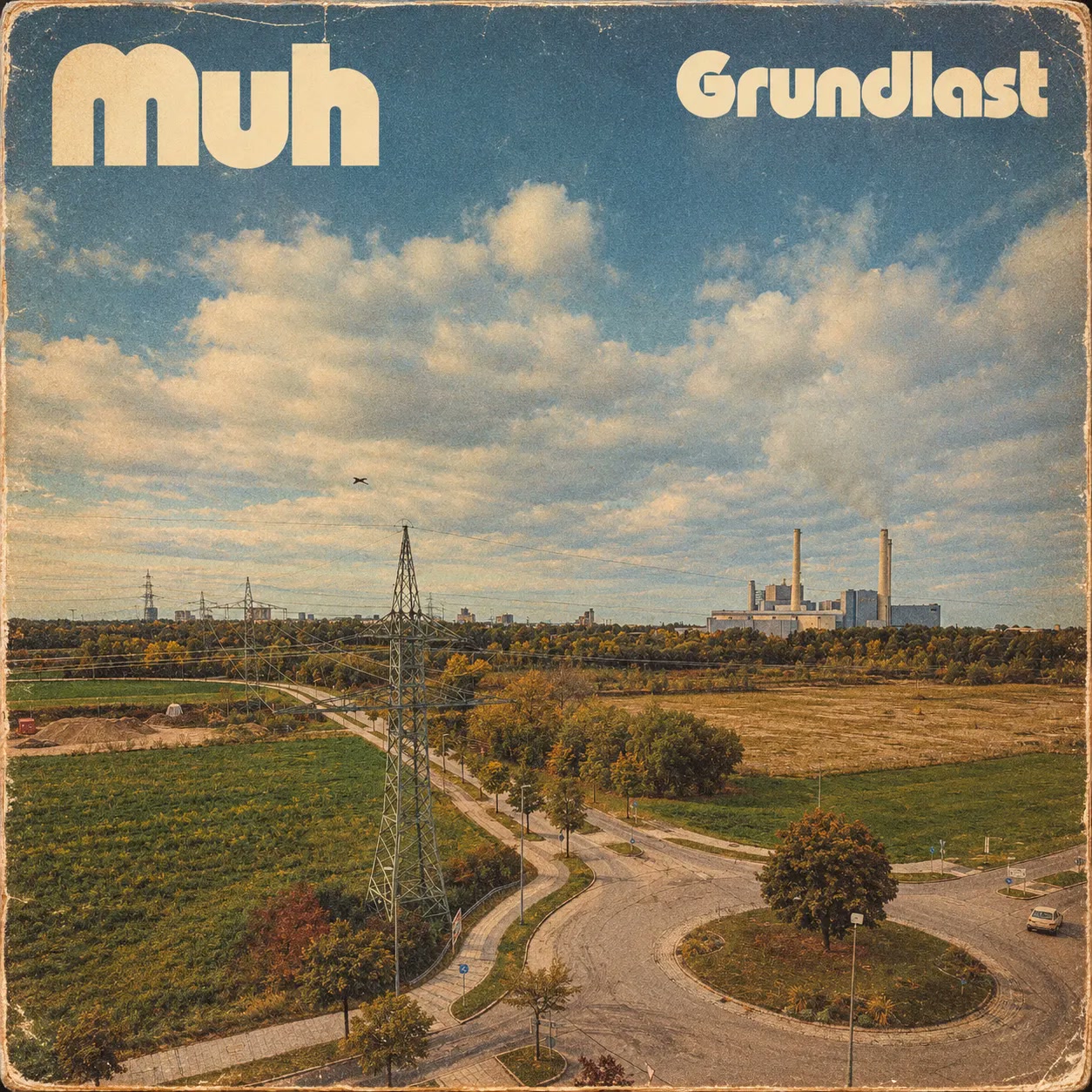
Base load. The city edge on an overcast October Sunday: a line of pylons, a roundabout with one car, a power plant and its plume, a solar field hidden behind the bushes. Everything is running and nobody is around. The mains hum is the tonic, and the piece drives like a heavy car through the roundabout.
G1 sits on 50 Hz, about 35 cents above equal temperament, and every patch states that offset where it states its own tuning. At 48 kHz one mains cycle is 960 frames, and at the home tempo a sixteenth lasts eight of them, so through the approach every row of the score starts on a whole cycle of the hum. That is why the bass can start each note half a cycle in: its low G then lands in phase with the hum and reinforces it instead of cancelling it. The tempo settles only in gears in which a sixteenth is a whole number of cycles; each shift ramps over a bar or two, and inside a ramp the rows fall between cycles.
| Gear | Tempo | Bar | Where |
|---|---|---|---|
| 8 cycles | 93.75 BPM | 2.56 s | Home: the approach, and back through it on the way out |
| 9 cycles | 83.33 BPM | 2.88 s | Braking into the roundabout, and again accelerating out of it |
| 10 cycles | 75 BPM | 2.8 s in 7/8 | The turn: eight bars of 7/8 in which the arpeggio's seven-step lap and the bar are the same length |
| 7 cycles | 107.14 BPM | 2.24 s | Accelerating away and the departure |
The form is one pass of a heavy car through the roundabout: far approach, close approach, braking, the turn, accelerating, far departure. There are no section cuts. Each instrument is off, passive or active, and takes three bars to change state. One voice is active at a time; one or two are passive; an accent answers the active voice, and on the way out the grains sing a counter-line of their own; the hum runs throughout and the percussion stays underneath. The car and the crow are effects: active only, and rare.
| Bars | Car | Gear | Active | Accent or counter | Passive | Passive | Percussion | Effects |
|---|---|---|---|---|---|---|---|---|
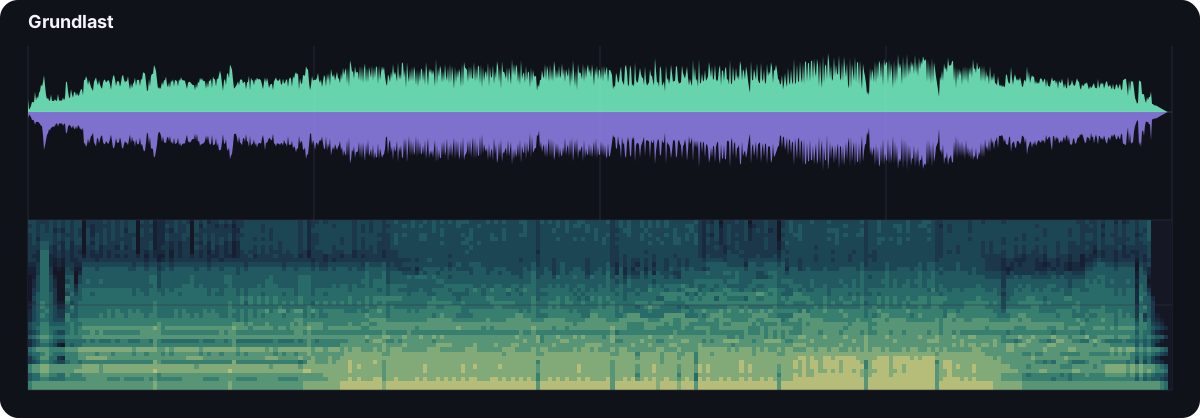
| 1–6grundlast 0:00 | far approach | 8 | — | — | — | — | crackle, sparse | the car passes once; the crow calls in the bass's rhythm |
| 7–22leitung 0:15 | far approach | 8 | Leitung, spinning up from far away | — | Sonnenfeld, low | — | crackle | the woop at phrase ends |
| 23–38 | far approach | 8 | Leitung | Kreisverkehr, in the bass's rests | Sonnenfeld, low | — | crackle; the kick approaching | the woop |
| 39–46wolkendecke 1:37 | close approach | 8 | Fahne, taking over from the bass | Wolken, morse pings | Leitung | Sonnenfeld, low | kick, clap, crackle | — |
| 47–62 | close approach | 8 | Fahne | Kreisverkehr, over the plume | Leitung | Sonnenfeld, low | full | the woop |
| 63–70kreisverkehr 2:39 | braking in | 8 → 9 → 10 | Sonnenfeld, opening as it brakes | Kreisverkehr, half speed | Fahne | Leitung, half-time | half-time | — |
| 71–78durchbruch 3:01 | the turn, 7/8 | 10 | Sonnenfeld in full light: E♮, Gm6 → C | Kreisverkehr, circling: the lap is the bar | Fahne | Leitung, lap figure | in 7/8 | the woop at the turn |
| 79–94rueckfall 3:23 | accelerating | 10 → 9 → 8 → 7 | Leitung, spinning up: quarters, eighths, phrases | Kreisverkehr, full speed again | Sonnenfeld, low, closing | Fahne | full | the woop |
| 95–110 | far departure | 7 | Fahne, its last plume | Wolken, a counter-line: GRUNDLAST in morse, sung | Sonnenfeld, low | Leitung | thinning | — |
| 111–118 | far departure | 7 | Leitung, its last phrase alone | — | — | — | crackle, sparse | — |
| 119–122 | gone | 7 | — | — | — | — | the last crackle | the crow answers; the hum alone |
The four voices of the band, like the four people in Kraftwerk, trade the front between them. The bass, the plume and the lead can lead or hold back; the arpeggio only answers, and the grains answer until, on the way out, they sing a line of their own.
| Voice | Active | Passive | Accent | Counter |
|---|---|---|---|---|
| Leitung · bass | Eight-bar phrases from one root-and-fifth cell, with its acid edge, and the woop at phrase ends | Motor eighths, darker | — | — |
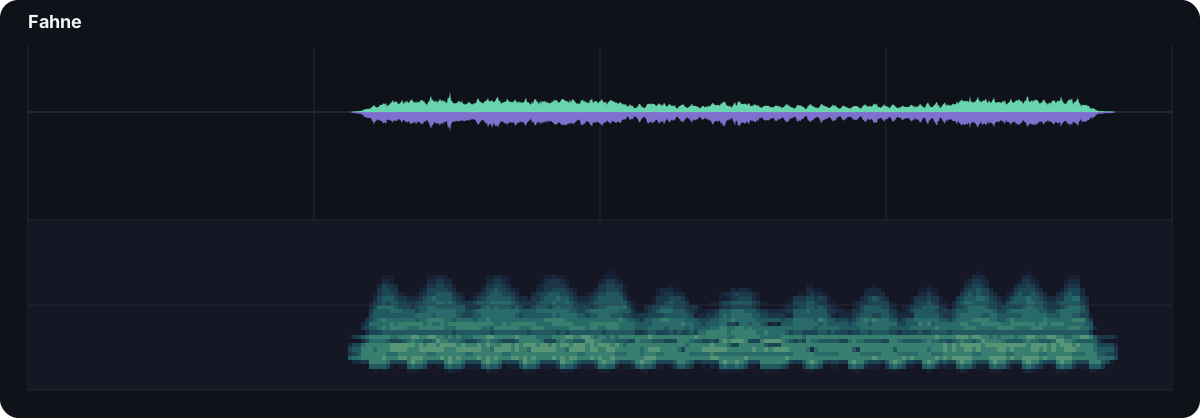
| Fahne · pad | The plume as melody: swelling chords whose top voice carries the lead's line, slowed down | Held or puffed chords that answer the lead's long notes | — | — |
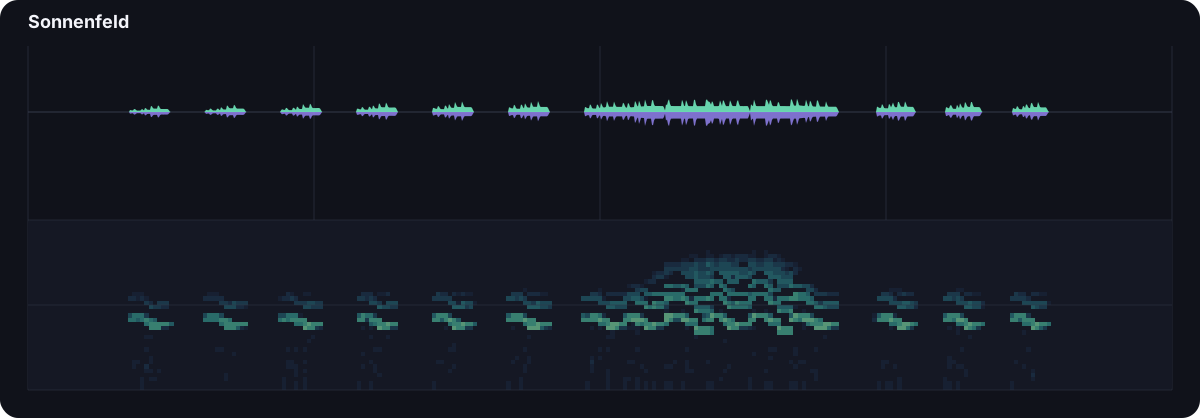
| Sonnenfeld · lead | The line, open; at the turn its E♭ becomes E♮ | The low form: fragments of the line behind a nearly closed filter | — | — |
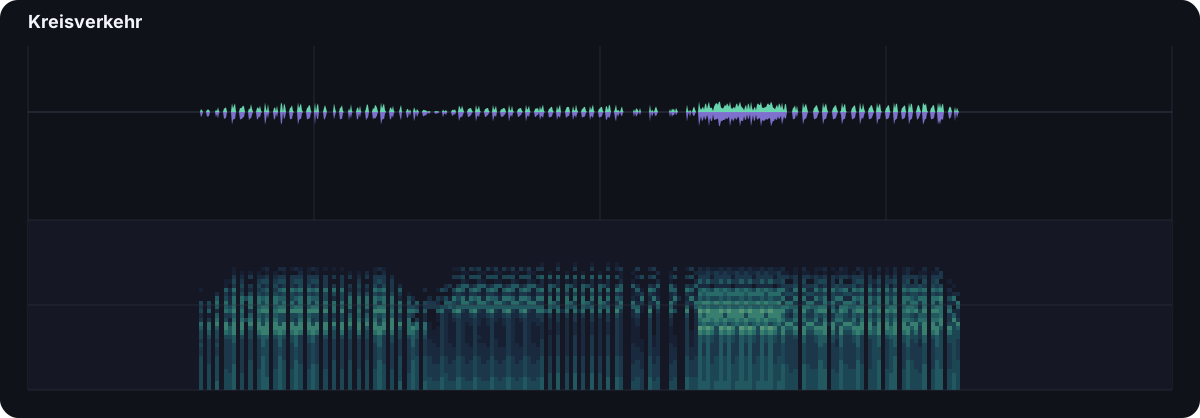
| Kreisverkehr · arpeggio | — | — | A seven-step lap that plays, skips a lap, plays a variation, skips again, circling the stereo field | — |
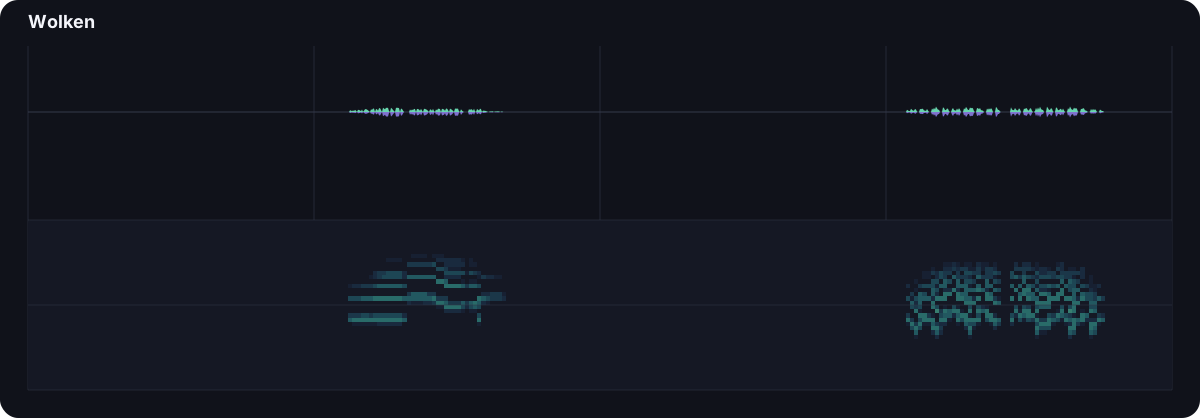
| Wolken · grains | — | — | Morse pings spelling GRUNDLAST, two octaves above the plume's line: in a busy stretch, they introduce the voice | The same morse sung at twice the length, in the band the arpeggio leaves, against the plume and the bass: slow enough to read. The first word opens with the arpeggio's falling triad; the second is the first one backwards |
Distance carries the roles. A voice that steps forward gets louder, brighter and drier; one that steps back, or arrives from far away, is quieter, darker and wetter, through its route level, its reverb send and its filter. The bass's octave glide, the woop, plays on a part of its own, and the stage clears for it: the line group (bass), the traffic group (arpeggio, high-passed at 150 Hz) and the drums group (kick, clap, crackle) duck under it, the music group (pad, grains, lead, high-passed at 220 Hz) ducks lightly, and the kick skips the beats it would play under it. The car and the crow share a field group. The hum and the woop stay outside the groups. The delay is timed in beats, so its echoes bend while the tempo shifts gear.
Layered · a sine on the 50 Hz tonic and a saw an octave up under a low-pass that follows the load: the hum, from the first row to the last.
Layered noise · high-passed crackle looping thirteen steps against the bar, as dense as the air is damp.
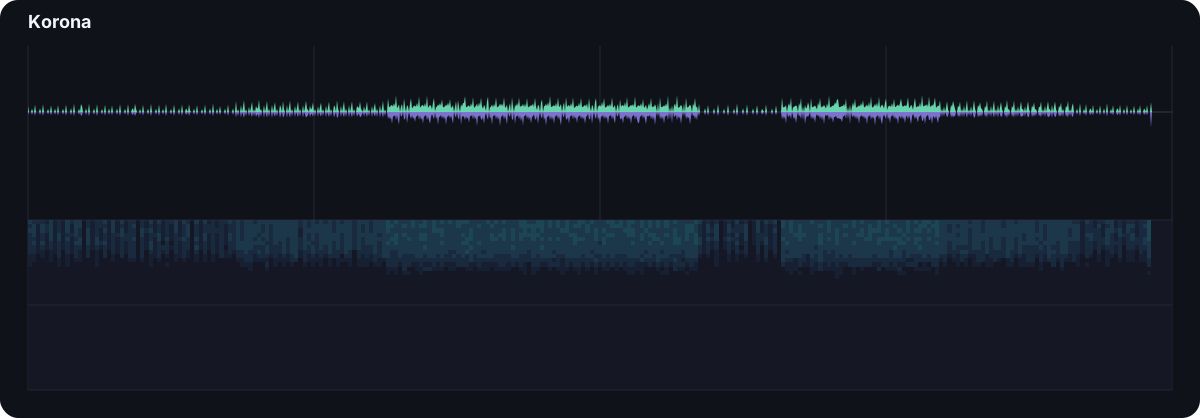
Ladder · the bass line in eight-bar phrases from one root-and-fifth cell, phase-locked to the hum.
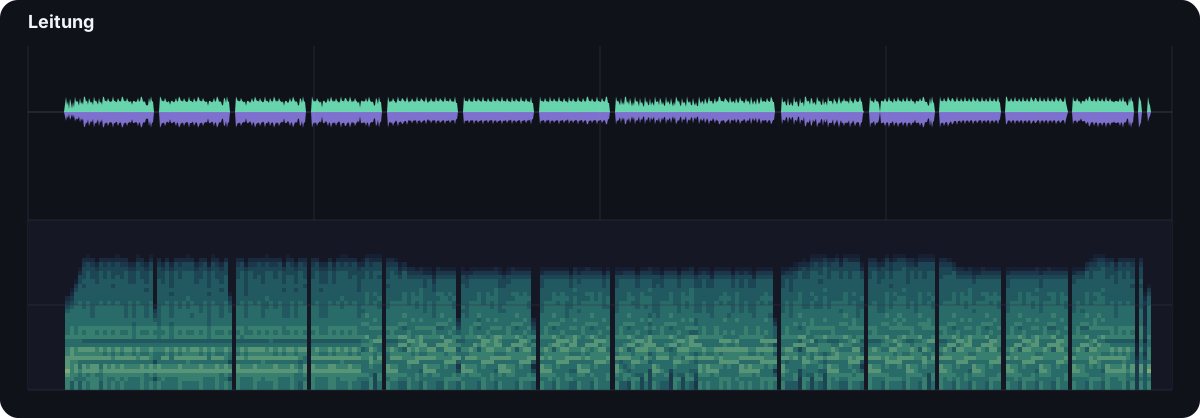
Ladder · the bass's octave glide on a part of its own, with the stage cleared around it.
Layered · a plucked seven-step arpeggio that circles the stereo field once per lap.
Prophet · two detuned saws with a slow attack and a slow LFO on the cutoff: the plume.
Sampler · a sixty-millisecond grain of the plume, looped through a crossfade, pinging GRUNDLAST in morse over the plume's line, and on the way out singing it as a line of its own, slowly enough to read.
Prophet · a square lead with vibrato, behind a filter that opens as the clouds do.
Ladder · a pitch-swept, saturated sine tuned to the tonic.
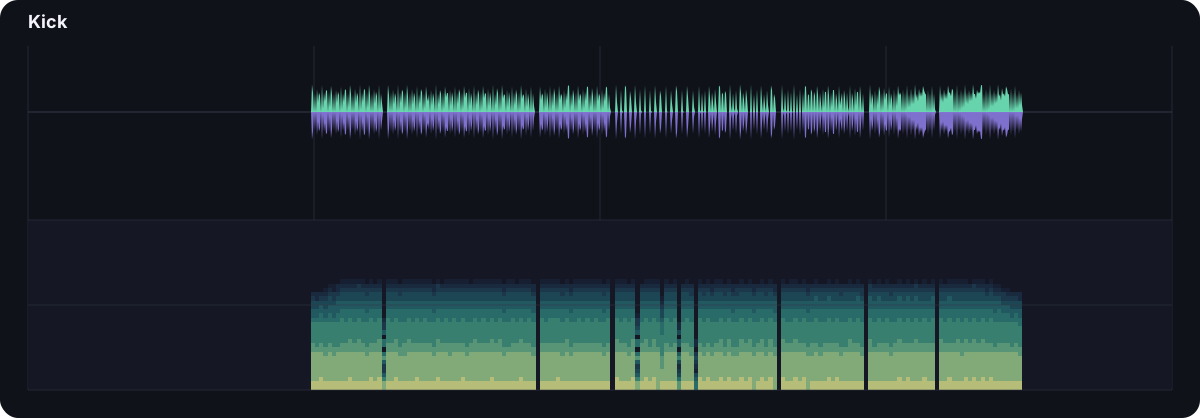
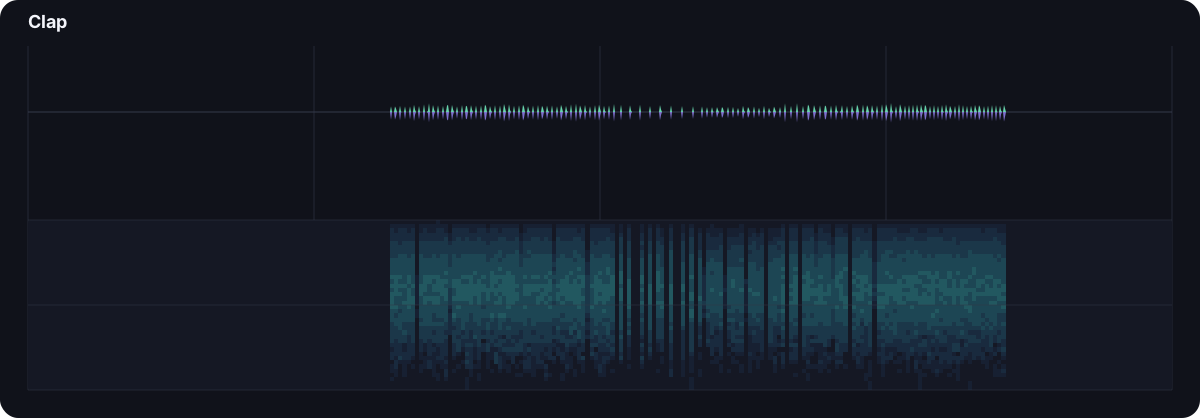
Layered noise · band-passed with a quick filter snap.
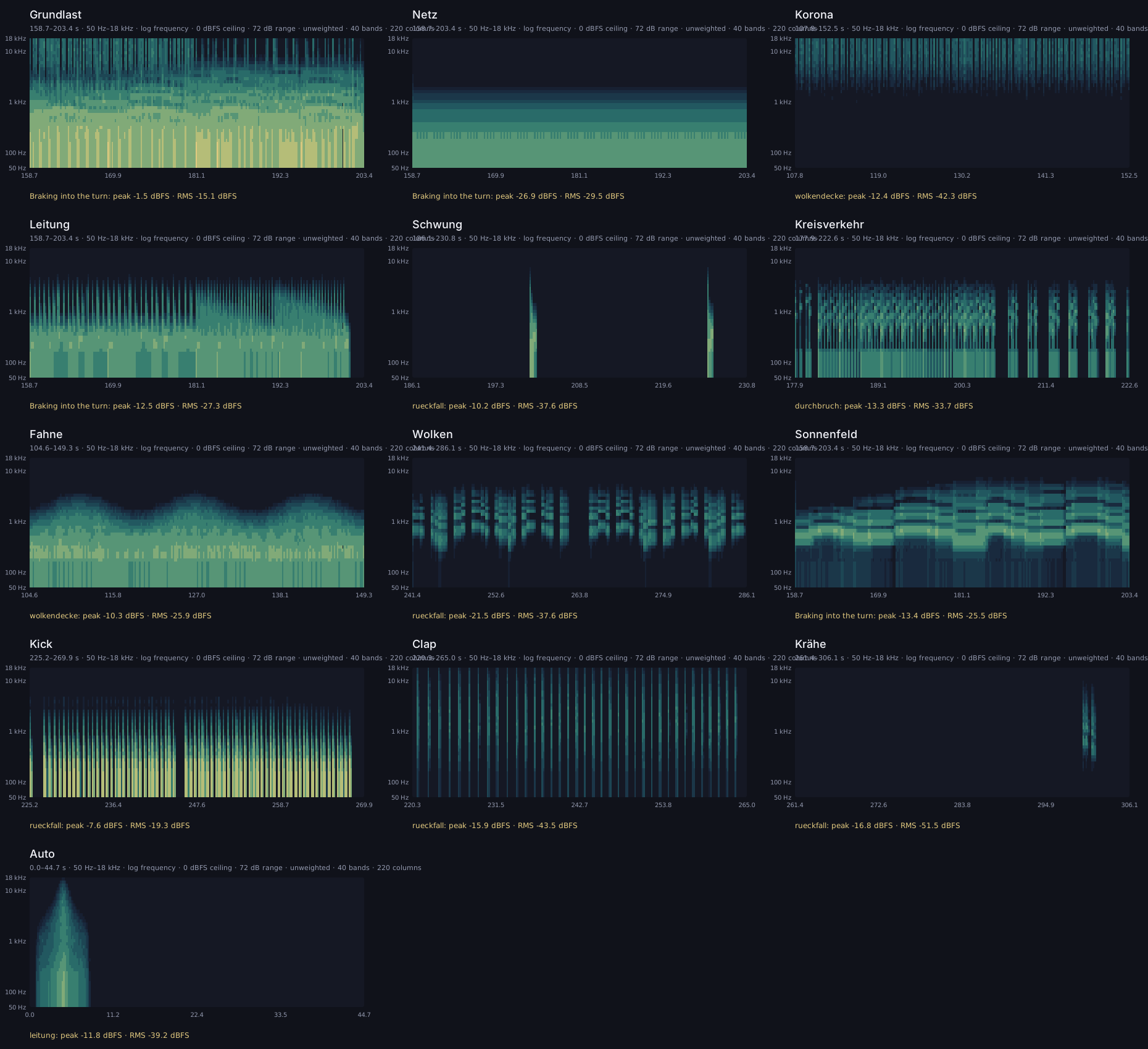
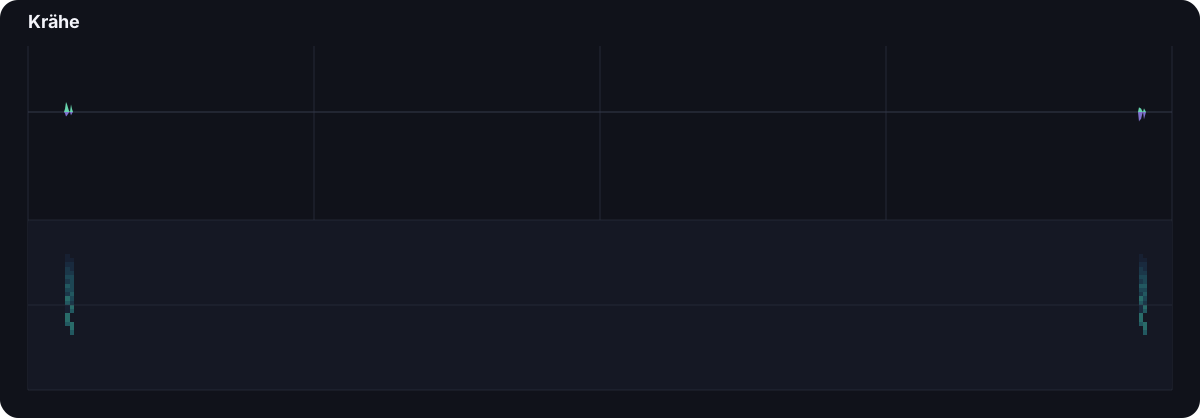
Layered · a saw and noise through a resonant band-pass with a falling pitch: the crow, two caws, a rest and a lower one.
Layered · tyre noise and a low engine passing once in the intro, with its Doppler shift, pan and distance written into the score.